

InterACTIVE Summer Learning
For those of you who have been following us for some time now, and if you’re new you’ll now find out, we are not only educators but parents of two young boys. We acknowledge that a few skills may have been lost or at least lessened during remote learning, so this summer we wanted to take an interACTIVE approach to keeping the learning alive.

For those of you who have been following us for some time now, and if you’re new you’ll now find out, we are not only educators but parents of two young boys. I don’t know about your students or personal children at home, but as for ours, the ending to this school year left them with a bitter taste in their mouths for this thing we call “learning.” As educators, this is so disheartening and frustrating, but at the same time can we really blame them? I would guess that many other children are feeling the same way as ours—burnt out, tired, apathetic, frustrated, bitter—the list could do on and on. We acknowledge that a few skills may have been lost or at least lessened during remote learning, so this summer we wanted to take an interACTIVE approach to keeping the learning alive.
What Does InterACTIVE Learning Look Like in the Summer?
As far as we are concerned, learning can be found in anything-from playing with friends in the puddles left by the afternoon rain, to hunting for tadpoles in the ditch, or by hiking hidden forest trails. We as parents believe though that there are times that if we don’t consciously make an effort to expose these moments are children will easily get lost in their choices of video games, TV shows and YouTube channels. Not that these things are bad, but we make an effort to keep our children the active participants in our day rather than passive participants.
When balancing our day, we often give the kids choice is our daily schedule and what types of things we are going to do. Regardless of the activity though, we try to keep a few principles in the forefront as we plan.
Inquiry: Many times in school students are just given information to process, memorize or curate with little time given for true investigation and inquiry. We like to find the things that interest our kids, just like we would our students, and then build in small ways they can investigate these things further.
Play: There is so much learning that comes through play. Just pure, unregulated, creative play. So much of our normal day is regulated and we work hard and encourage activities that revolve around play.
Collaboration: Collaborating with others is closely related to play, but really the idea here is finding activities and opportunities where our kids have to work together to be successful. It’s important to keep skills like listening, revising sharp, so when our kids do go back into the classroom they will be able to coexist with their classmates again.
Reflection: Being able to reflect and remember an experience is important to us. Sometimes there is learning to be found even after a fun activity or event though a simple, thoughtful conversation.
How to Create InterACTIVE Learning Activities
Choose your priorities: Do you want to be outside more? Maybe you want to try and reconnect with friend and family after this period of solitary. Perhaps you want to keep your kids actively reading or writing or working on other specific skills. Decide on what your priorities are and then create experiences that your children will inevitably get to do those things through.
Set aside time to be present: We can relate to this more than ever now that we have been working from home, but we try to be purposefully present with our kids during these learning moments and activities. It is true what they say about the quality of the time spent over the quantity of time given. We often find that at first our children may resist or be uninterested in a specific task or activity, but once they see us involved they quickly become committed to the task. This is the foundation of interACTIVE relationships—they are two way and reciprocal.
Tip: If you find it hard to separate your work time or are having trouble getting in a productive time for you, try building a time in to work when your kids are doing something less involved. For example, when our children get their time for video games or screens, we used this as a time to sit and read emails, work on presentations or take some quality time to read a book!
Keep it fresh: Our kids love going to the beach, but if we went every other day they would quickly lose the excitement of going and be less engaged with the adventures we had there. So we go often, sometimes changing the spot we visit, the time of day we go out, or who we go with. We try to rotate our favorite activities like swimming or bike riding and sprinkle in the newer and more unknown adventures in between.
InterACTIVE Summer Learning Ideas
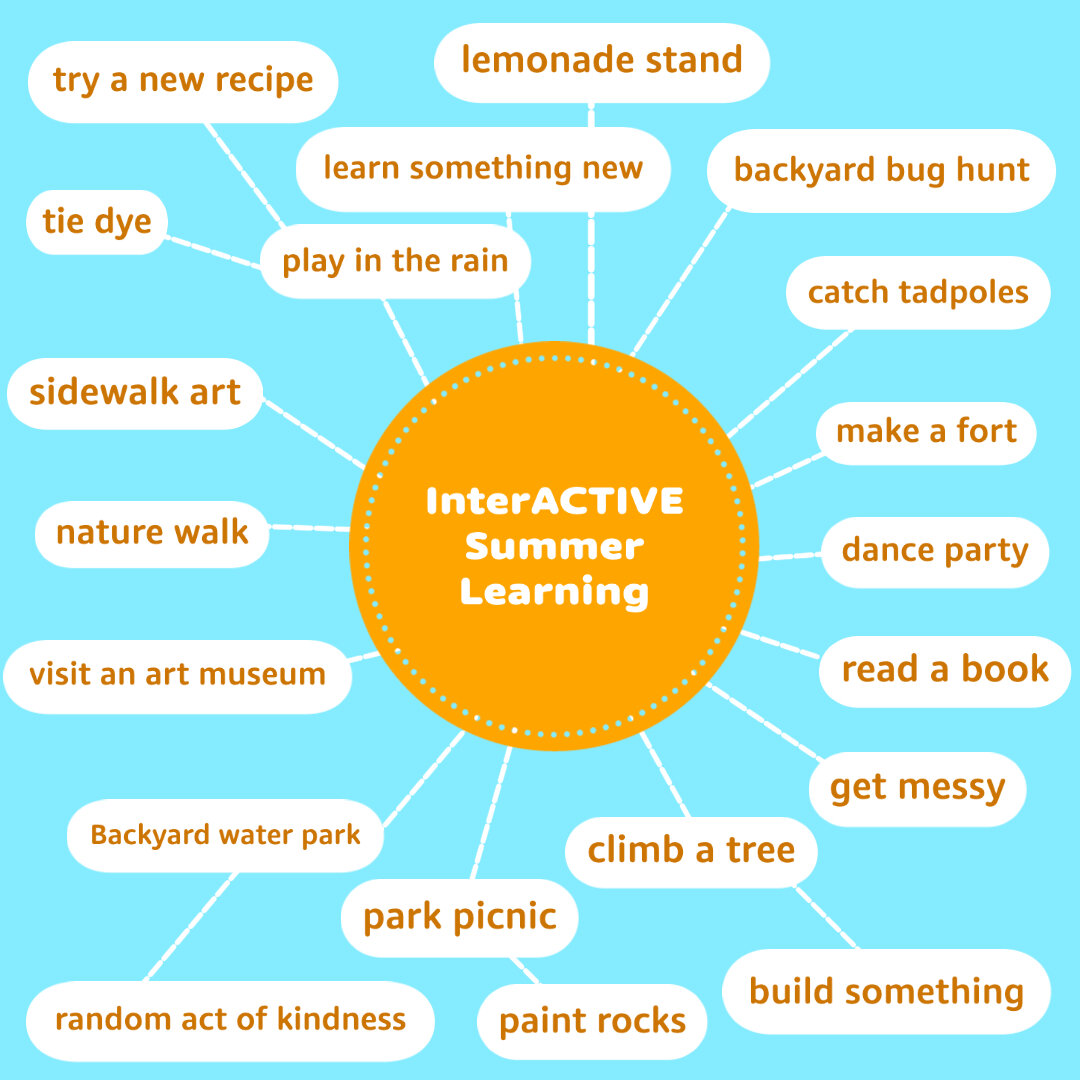
Being teachers may help us a bit as we plan for our summer, but we also love learning from the unplanned, organic moments we spend with our kids. We did include though a few of the things we have done so far with our own kids that have been engaging and definitely educational. We also included some ideas that we hope to get to this summer as well.
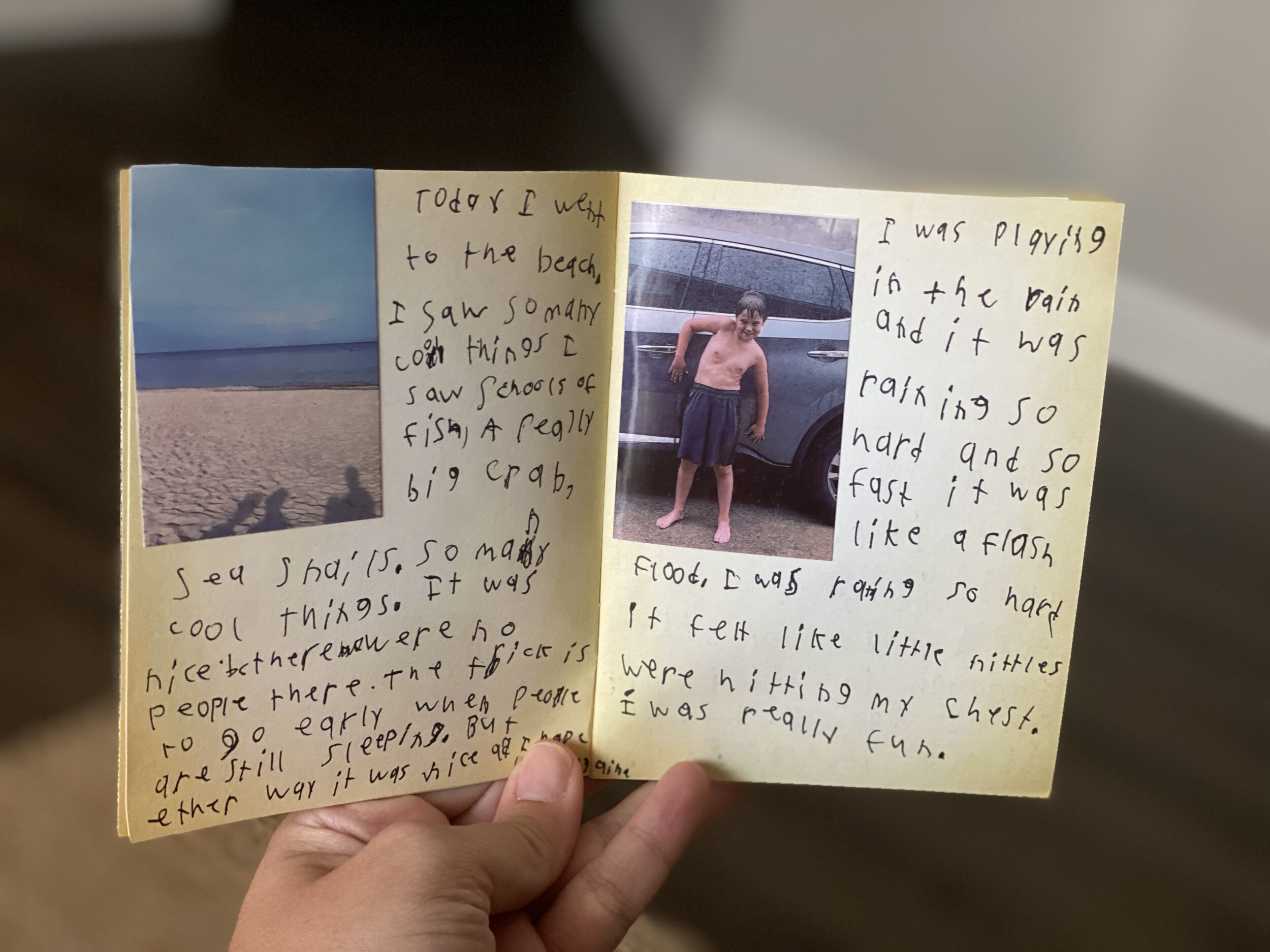
Another thing we have started this summer with our own kids are summer “adventure” journals. The original idea came from a local blogger named Kelli Hampton and essentially we keep track of all the small things we do and journal our memories. You could, as Kelli suggests, make the journal ahead of time as almost a bucket list of sorts, with challenges and things for you kids to do, but we keep ours more organic. Our pages stay blank and we just record whatever memories we wish to. Before summer started we purchased a pack of small, blank passports and are using one of Mrs. Merrill’s favorite classroom tools—her sprocket printer. A sprocket is a small, wireless, photo printer that allows you to print small, Polaroid-like photos straight from your phone. (And as of the day I wrote this blog, the printer linked here was $40 off which is the cheapest I’ve seen it!)


In today’s time we take the majority of photos on our phones and this printer allows the kids to print the photos we took documenting our activity or trip, peel off the sticky backing and plop the photos down in their adventure journals. They then write whatever they like to in regards to what we did, and this allows mom and dad to give a bit of writing review as we go. You could totally make these journals digitally too! We would recommend programs like Book Creator or Buncee for something like this.


What’s great is that the kids usually take the lead and will often ask us to take a photo so they will have it to write about in their adventure journals. They are taking the ownership of it which is always what you want when it comes to learning. The packet of books came with multiples, so if they fill up one book they can start another. Maybe even using one as a place for some narrative writing too! (A mom can hope, right?)
The beauty of interACTIVE learning is that it can happen anywhere! It doesn’t always have to use technology or be in a classroom full of students. Here’s to having a summer filled with memories and learning!
Stay interACTIVE!
~👗➕👓
For more information on how you can make learning in the classroom more #interACTIVE, check out our book The InterACTIVE Class!



Preventing Summer Slide with Buncee
Creating a Buncee doesn’t need to take all week, be part of a long research project or contain different sections etc. Rather, think of Buncee as a quick, one-stop tool where students can go in to keep skills fresh, stay engaged over summer while creating and designing. This is why we think it is a great app to use to prevent “summer slide”.
Buncee is an amazing creation tool, and one of our favorite Ed Tech tools. We highlight it in our book The InterACTIVE Class and it is often the subject of webinars and tutorials that we take part in. Besides being an amazing presentation tool, many educators miss that it is simply a creation tool. Creating a Buncee doesn’t need to take all week, be part of a long research project or contain different sections etc. Rather, think of Buncee as a quick, one-stop tool where students can go in to keep skills fresh, stay engaged over summer while creating and designing. This is why we think it is a great app to use to prevent “summer slide”.
Using Buncee to Prevent the “Summer Slide”
One of the top reasons that makes Buncee such a great platform is that it listens to the educators who use it and they are alway working on adding in new content or adjusting based on feedback. The Buncee team always works very hard to help create and prepare content for educators so getting started with an idea or project is simpler. They have already created a great Buncee to get ideas flowing for summer and it is easily sharable, which means you can push it out to students in a few short clicks.
One Slide Ideas and Activities
Many educators forget that students can create unlimited Buncees and that using Buncee doesn’t have to be for something long and intricate. We love the idea of creating small, bite sized, challenges for students and families to complete together, with the goal behind them being interaction and engagement. The activities could be educational and around subjects and standards specific to that age of student, as well as being fun, interactive activities that get students engaged with the people and places around them. We’ve curated a few ideas here in partnership with the Buncee team for you to copy, share and use right away!

Shopping list math challenge: Have your child keep those math skill alive with a simple “trip” to the grocery store. You could keep the problem as is or make it age appropriate for your own child or class.

Journal writing: Giving kids a place to journal or write is important, especially during a time time like this. Try with one slide and if students like it they can keep adding in slides or create a new Buncee journal each day designed to mirror their mood.

Monster read aloud: Enjoy a read aloud with your child and then have them creatively build based off of that story. Build a perfect monster, or maybe even write a creative story about them. You could even print out the monster for a Flat Stanley-like project!

Recipe Swap: Mix, blend, bake and then share! Whip together a favorite recipe, write it down and share with others! You can even print and save to create a collection of new things to try.

Daily moment of gratitude: Getting kids to stop and think about things they are thankful for is a great way to boost mood and help with positive thinking.

Summer postcard: Have student write to classmates, family members and friends. Send the postcard electronically or print out and mail!

Book Snaps: Have students share favorite quotes, lines, and illustrations in a book but taking a photo of the page and uploading it to Buncee. There they can mark it up, add animations and even include audio of why they connected with that particular part of the story or article.

Backyard scavenger hunt: Get kids outside and searching for fun things they may find while exploring!

Virtual classroom or library: Give students a place to go where you can update reading lists, fun family challenges or school specific activities. This would work for an individual teacher or a media specialist.

Buncee Summer Sharing
When thinking of how to integrate Buncee into the summer, we feel like the possibilities are endless. Maybe you send out challenges to a groups of students sitting in a “virtual” summer school class. You could continue weekly check ins with your current class and send a short activity their way for something to do while away from the classroom. Try embedding a Buncee board into your schools webpage with summer resources or on your media center section. You could create challenges based on school theme, integrate summer reading programs or make a few grade level specific activities. Buncee challenges are also perfect for you own children at home or to share with grandchildren, nieces and nephews, etc. We’ve included a few ideas on how to easily integrate Buncee for simple sharing and communication.
Buncee Boards: Create a Buncee board full of challenges and share the link with parents, family members, friends—you name it! All the challenges could then be copied and used by each individual giving them the choice of which to do in what order. If you would like more information on what a Buncee board is, or how to create one, click here.
Wakelet: Buncee integrates beautifully within Wakelet. Send a link to parents at the end of the year, and just embed each challenge as you wish. Students and families can check the link on their time to find your list of curated challenges. Add them all at once or add them as you go.
Flipgrid: Many don’t realize that Buncee is one of the many things you can add as a Topic Focus on Flipgrid. We love this integration because not only will students get to complete the Buncee challenges, but they could then discuss and share on Flipgrid while also linking their Buncee for others to see.
Microsoft: Buncee is also fully integrated into Teams and OneNote which makes it easier to share with students and families over the summer if you can just embed or link it as a tab to a place students are already familiar with logging in to.
Preparing for the Fall
As educators we want our students to enjoy their summer and be refreshed coming back to school in the fall. But with all that has taken place over the past few months, we really do think there is an importance to keeping kids connected to one another, creating content and staying creative until the next school year.
For more information on Buncee, check out our post on how easy it is to create Bitmoji classrooms! They are a great way to keep all assignments, tasks, challenges in one place, and you can even link different Buncees together to create multiple “rooms” or learning spaces within the virtual space. Read more here!
For more ideas and lessons using Buncee, check out our book The InterACTIVE Class!


Stay #interACTIVE!
-👗➕👓