

What is Microsoft's Reading Coach?
In late 2021, Microsoft released Reading Progress - a tool designed to help students become better readers and save educators time. Now, a new update and integration is here: Reading Coach!

In late 2021, Microsoft released Reading Progress - a tool designed to help students become better readers and save educators time. Now, a new update and integration is here: Reading Coach. In this blog post, you’ll learn what Reading Progress is and how it works, tips and tricks and how Reading Coach can help your students. Click any subheading below to jump to that section.




What is Microsoft’s
Reading Progress?
Reading Progress is a free tool built into Microsoft Teams designed to support and track reading fluency in your class. Students record their reading on camera and submit it to you. Imagine this, the same type of technology used in the Flipgrid Shorts Camera, combined with the power of Immersive Reader and the distribution power of Microsoft Teams. All of these ideas together form Microsoft’s Reading Progress. If you’re interested in learning more about all the nitty gritty details, click here or the image below. We’ll walk you through everything!


Tips and Tricks When Using Microsoft’s Reading Progress
One of the things we love most about Microsoft’s Reading Progress is that it is appropriate for all ages. We love how it can quickly and efficiently assess our students and how it saves time grading running records. We also appreciate how easy it is to use. Once your students are in the assignment, they’re recording themselves in (literally) just several clicks. But now that we have had almost a full year working with Reading Progress, here’s a few tips we can share:
If you teach younger students, we recommend lowering the sensitivity.

Younger students may have difficulty enunciating clearly, which sometimes leads to errors. This can be remedied by lowering the sensitivity to “Less sensitive.”
Take advantage of the option to limit time.
Toggling on the time limit might prevent frustration if a student is struggling with a passage. If a student is fluently reading, they will still feel successful when the timer stops. This feature can be turned on/off when creating the assignment - directly under the “Number of Attempts."
Assignments are now editable!

A little known secret is that Reading Progress assignments are now fully editable! When Reading Progress launched, if you made a mistake on the assignment, you would have to delete it and start all over again. Now, in an assignment, click the three dots and then click “Edit assignment.” No more deleting!
Reading Progress isn’t just for running records.
If you’re a primary teacher, you can use it to assess sight words, too! That’s right…automatically grade sight words! You can learn all about how this works in our blog post. Click here or the image to read all about it!


What is Microsoft’s Reading Coach and How Can it Help My Students?
Microsoft’s Reading Coach is another free add on to Reading Progress. Now, after your students have completed reading a passage, Reading Coach will intelligently (and immediately) identify words that the student struggled with. It will then provide the list of words to practice, prior to the student turning in the assignment. Here’s how it works:
Once a student has stopped the Reading Progress recording, Reading Coach will generate a list of words that the student struggled with. The student can then take time to practice the word(s).

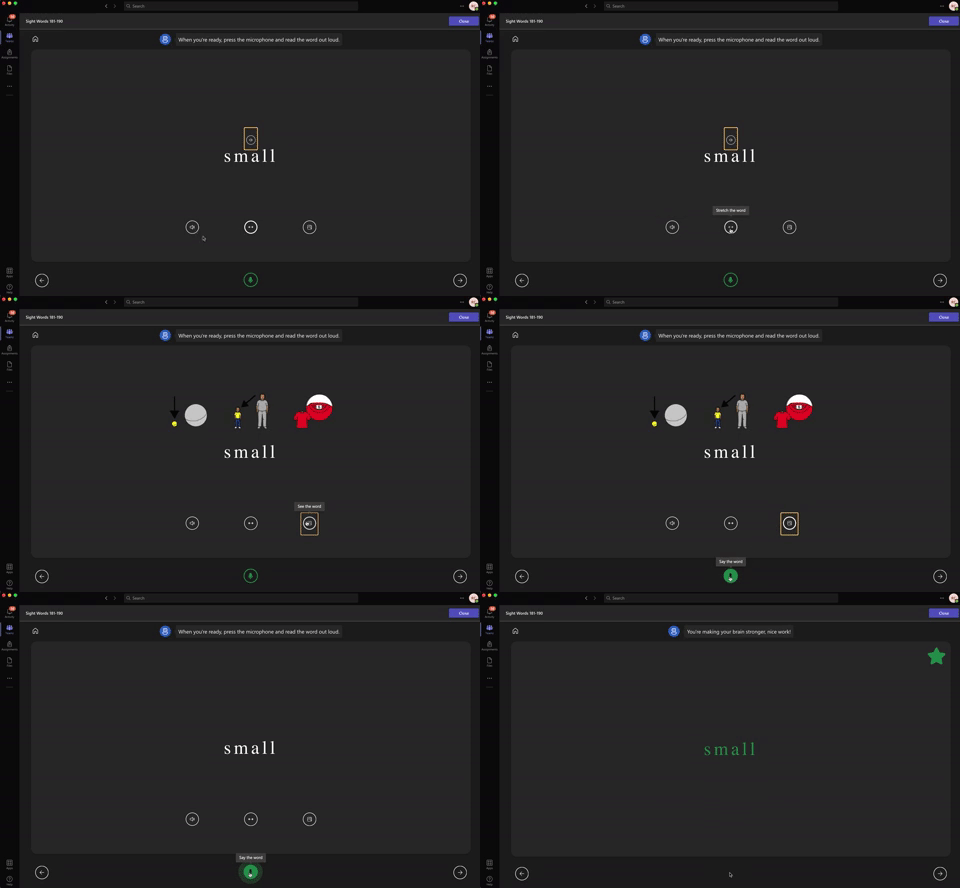
When students click on a word, they have the option to hear the word read allowed, stretch the syllables out, or (if available) “see the word,” which pops up an illustration describing the term. Students can earn a star on the word for correctly saying the word by clicking on the microphone (located on the bottom of the screen).
Students can easily go through the words using the arrows. Notice, all of this can be done prior to turning in the assignment. Reading Coach is optional, though, and students may bypass it by just turning the assignment in. We recommend training your students to take the time to use it, which will give them even more (independent) practice on terms they struggled with.

But, students aren’t the only ones in on the fun! Educators now have access to valuable insights (available through Microsoft Teams by clicking on a student’s assignment, then clicking “Insights.” This report will generate information like correct words per minute, accuracy rate, practiced words, and much more.
If you’re a primary teacher, you can also use Reading Coach to help your students practice their sight words! Check out our blog post for downloadable templates of the 220 Dolch (Sight) Words. Upload them one-by-one and then students can practice the words ten at a time. If a student misses a word, Reading Coach will automatically help tech it to them!
-- Stay tuned for more Microsoft Education ideas that you can use in your classroom! Be sure to follow us on social media (@TheMerrillsEDU everywhere) for more! 👓👗
For more tips, tricks and lesson ideas for making learning more interACTIVE, check out our books The InterACTIVE Class and Flipgrid in the InterACTIVE Class on Amazon!


How to Use Reading Progress to Automatically Grade Sight Words
Learn how you can use Microsoft’s Reading Progress to automatically grade Sight Words! If you’re a primary teacher, this is a must see and an absolute time saver!

This past summer, Microsoft released its Reading Progress app, that enables students to independently read aloud, record themselves, and grow their reading skills while allowing educators to better support students' progression. It has been a game-changer for running records, which now can be done independently through the app. For a full breakdown on Reading Progress and it’s potential, check out our blog post here.
Other than running records, another time consuming task is assessing sight words. Sitting down with students and going through the list of words is a daunting task and can take up a lot of time. But, can we use Reading Progress to automatically grade a list of sight words? The answer is: YES! In this blog post you’ll learn:
(click on any subheading to jump to that section)
How Can Reading Progress Automatically Assess Sight Words?
How Does it Look When Reading Progress Assesses Sight Words?
How Do I set Up Reading Progress to Automatically Grade Sight Words?
I get it! So…What do I need to know? Any troubleshooting steps?
Download Free Sight Word Templates (made for Reading Progress)
See it in action! Assessing Sight Words Using Reading Progress
How Can Reading Progress Automatically Assess Sight Words?
Reading Progress is a ⚡️FREE⚡️ tool that can be found within Microsoft Teams. Imagine if the developers of the Flipgrid Shorts Camera, Immersive Reader and Microsoft Teams all sat down at a table and collaborated on what to do next. Reading Progress uses the technology from the Flipgrid Shorts Camera to record a video of students as they read. The same type of technology that is used in Microsoft’s Immersive Reader then takes the video and intelligently looks for errors, mispronunciations, miscues and more - AUTOMATICALLY. You read that right. The technology does all the work. A full report is provided to the educator, who can go back and view the recorded video and listen back to how the student performed. If the technology marks a student as reading a word correct / incorrect, the educator has the ability to change it on their end.


But how does this look when it comes to sight words? Reading Progress takes the text and listens for errors when being read aloud. So, technically you don’t need to have a full paragraph or even sentence for it to start working. Whatever words appear in the document is what the program will look for. If you put the words: red, yellow, me, and see, it will expect to hear those words read in that order. You don’t even need to put commas in between the words!
How Does it Look When Reading Progress Assesses Sight Words?

Giving Sight Word assessments through Reading Progress is best performed when you assess 10-20 words at-a-time. This makes for a quick turnaround from your students, who can easily get in and read off the words efficiently. Once your students log onto Teams and click on “Assignments,” they are able to select the appropriate Sight Word list and then start reciting them. Here’s how it looks from the student’s perspective.
To the student, the focus is on the words. Once they read through them, they click the “I’m done” button, then “Turn in.” The recording is uploaded as a video and can be watched back by the teacher.
The uploaded video will also produce a full report, only available to the educator. This report will indicate any incorrect words. Educators have the ability to watch back the recording of the student reading off the words. If a word is marked incorrectly, it can easily be changed from the drop down menu. This is also a great place to “jump to a word,” or listen to a specific word that the student missed.
Since we give our students 10 words at-a-time, we can easily grade them with a /10 score. These short assessments are just-right for the students to get through confidently - and it makes listening back to them easier for me!
How Do I set Up Reading Progress to Automatically Grade Sight Words?
Setting up Sight Word Assessments using Reading Progress can be done in several clicks. Follow these steps to get your students started, or click here for a video tutorial:
Launch Microsoft Teams, then click on “Assignments.”
Click on “Create” and then select “Assignment.”
Select the Team that you wish to assign the assignment to, then click “Next.”
Enter an appropriate title for the assignment. For example: “Sight Words 1-10.”
Under “Instructions,” click on attach. Then, select Reading Progress from the drop down menu.
On the next screen, click “Upload Word or PDF” (for a free download of all 220 sight word templates, click here).
Upload your sight word assessment, then take a look at the information on the right. You won’t need to enter a reading level, but you may want to limit the number of attempts your students have per sight word list (see the troubleshooting section below). Change this to fit your preferences, then click “Next.”
The due date defaults to the same day, so adjust it to appropriately give your students time to complete the task. Once you do, select “Assign.”
Your students will receive a notification that the assignment is ready. Now, sit back and wait for them to start submitting it! Once they do, go in through the educators dashboard and view their work! Need to actually “see” how this is done? Check out the tutorial below!
I get it! So…What do I need to know? Any troubleshooting steps?
So this sounds great, but…what could go wrong? What should I look out for? Any tips?
Now that we’ve done this for a while, here are our two most important takeaways:
1. When creating your sight word lists, only use the words that you want the students to recognize. For example, do not add a title to the body of the document. Just list the words. Otherwise, the students will need to read and recognize them when recording. IF they say something wrong, it will mark them wrong.
Takeaway: Just keep it simple! Add only the words!

2. When creating the assignment, change the number of attempts to 1. You don’t want students submitting more than one attempt at the sight words, so be sure to change that setting from the defaulted “unlimited” to “1.”
Takeaway: Explain to the students that they will only have one attempt and that they will need to do their best. If they make a mistake, encourage them to restate the words in their original video. If they stop, they will NOT be able to upload another video (if you have the attempts set to 1).
Download Free Sight Word Templates
(made for Reading Progress)
We’ve made things even easier for you with these sight word templates! This is a direct link to download the entire folder of all the Word documents containing ten words per list (for a total of 22). Just download them, then upload them as your assignment(s) on Teams! 🙌🏻

See it in action!
Coming soon!
-- Stay tuned for more Sight Word ideas that you can use in your classroom! Be sure to follow us on social media (@TheMerrillsEDU everywhere) for more! 👓👗
For more tips, tricks and lesson ideas for making learning more interACTIVE, check out our books The InterACTIVE Class and Flipgrid in the InterACTIVE Class on Amazon!



6 InterACTIVE Ways to Use Microsoft Forms
There are many hidden gems within Microsoft EDU, and Microsoft Forms is one of them! Microsoft Forms was released in 2016 and since then, there have been may updates and features released that take it beyond simple question and answering.

There are many hidden gems within Microsoft EDU, and Microsoft Forms is one of them! Microsoft Forms was released in 2016 and since then, there have been may updates and features released that take it beyond simple question and answering.
Assessment is an important part of any classroom, even an InterACTIVE classroom, but it is imperative that when we do assess students we are using it to bridge the gap between our teaching and learning. We should not simply give and grade an assessment, but rather use it to gather, evaluate, and remediate the gaps between knowledge rendered and knowledge retained.
6 Features of Microsoft Forms
1. Uploading Files to a Microsoft Form
The ability to upload a file created outside of Microsoft Forms is one of our favorite, interACTIVE features. Students need the chance to demonstrate their understanding of a concept through creation, and this powerful feature allows students to create in programs such as Adobe Spark, Flipgrid, Microsoft PowerPoint, iMovie, and then share with the teacher through Forms.
*This feature is only available to users within the same organization.
2. Types of Questions
When creating a Form, you have several types of questions you can use to build it. Choose from these options to customize your Forms in ways that specifically meet the needs of the students you have in your classroom.
Multiple choice: When using this feature, Forms will even suggest possible answers based on the words used in the question or answer choices already submitted.
Text: Giving students the ability to write and explain their thinking is always good and in Forms, you can specify whether it’s going to be a long answer or a brief one.
Rating: You can specify both levels (numeric) and symbols (stars) when using this option. This is great for a book review or character rating after the end of a unit.
Ranking: This type of question is great when asking students to debate or justify an answer. For example, have students rank details in order of importance in regards to the theme of a story. Then, pair with a text question and have them explain their rankings and justify the order they chose.
Branching: Although this isn’t technically one of the types” of questions you can use, it is a great, interACTIVE feature in Forms that allows you to connect, or branch, questions based on a students answer. This allows you to redirect students to different questions based on correct or incorrect answers.

Net Promoter Score: Great for more survey-like type questions or can be used when looking for students’ opinion in regards to a topic.
3. Custom Controls
There are many hidden features in Forms that you may not know about at first glance. Simply head to the Settings in the Three Dot Menu and take advantage of features like shuffling question order, adding a start and end date, creating custom Thank You messages and adding email notification.

4. Peer Collaboration
Creating interACTIVE Forms can often be a two-person job or more, and for that, Microsoft Forms has given creators the ability to collaborate. To share a form with your friend or colleague, simply tap on the Share button in the top right corner of the screen and select the Share option from the right menu.

5. Ability to Analyze Responses
As with any assessment in an InterACTIVE Class, giving the assessment is just the beginning. Once students have finished, you need to review and reflect on the data given. When using Microsoft Forms, you simply head to the Responses tab and you will find the answers to your assessment in both a visual group format and individually.

6. Immersive Reader
The integration of Microsoft’s Immersive reader makes Forms so accessible to all students. Immersive Reader is a free tool that utilizes techniques proven to help people read more effectively, such as read aloud and translation. This feature allows questions and answer choices to be read aloud to students while working to help accommodate and give independence.

Additional Features and Resources for Microsoft Forms
There are so many other features that make Microsoft Forms a great tool to use in the classroom. Sharing with colleagues, the ability to send a copy, sharing with links an QR codes, customizing the themes and colors—this tool is one you will want to get to know before the next school year.
Interested in Microsoft Forms? Here are a few examples you can look at for more ideas.


For more interACTIVE ideas to use when integrating technology into the classroom, check out our book, The InterACTIVE Class.